How to Rehearse a Lip-Sync Performance
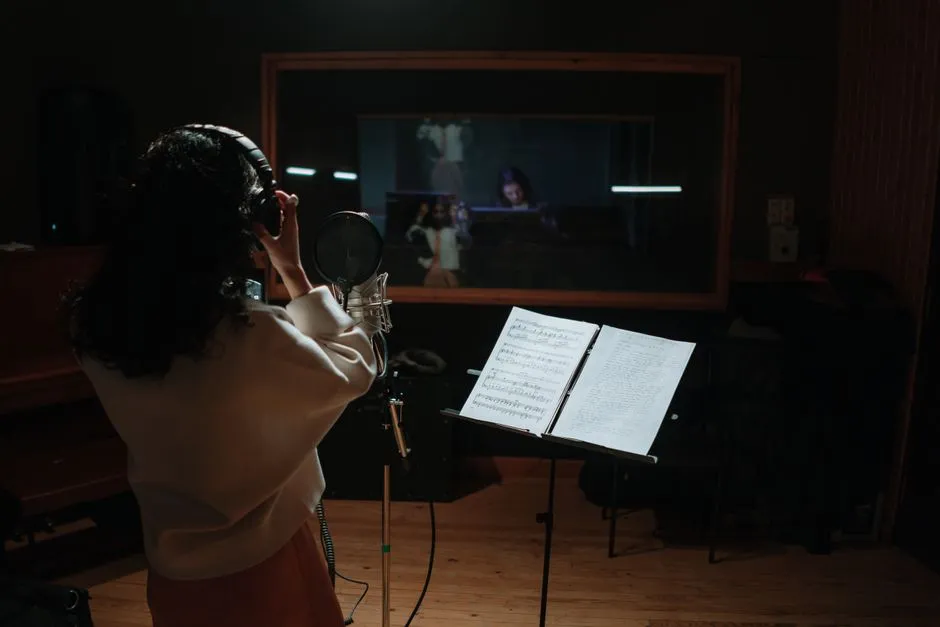
Learn the sound before adding movement
Rehearse a lip-sync performance by learning the complete vocal recording—lyrics, breaths, consonants, ad-libs, silences, and overlapping voices—then adding intention, blocking, costume, and technical cues in layers. Mouth shape matters, but believable lip sync begins with listening.
If you only know the lead lyric, the first unexpected backing vocal will arrive like a relative nobody warned you was staying for dinner.
Build a precise lyric sheet
Transcribe the final performance edit rather than copying lyrics for another version. Mark breaths, held vowels, clipped endings, spoken sounds, laughter, repeated fragments, and vocal handoffs. Verify unfamiliar words and references.
Speak the text in rhythm without music. Then whisper it, exaggerating consonant starts and endings. Finally, rehearse with the track while keeping the face relaxed enough to show expression. Oversized mouth shapes can blur quick phrases instead of clarifying them.
Give every section an intention
Beside each passage, write an action: persuade, confess, dismiss, tempt, challenge, celebrate, or recover. This prevents the face from cycling through unrelated expressions while the lyric attempts to tell one story.
Use song-structure mapping to vary repeated choruses. The words may return, but the situation should have changed.
Add movement in layers
Rehearse first in a small marked area, then apply planned stage blocking. Connect movement to musical or lyrical reasons rather than walking because the floor appears lonely.
Film from audience height and distance. Watch three passes:
- sound on, for timing and overall effect
- sound off, for readable physical story
- audio only, for missed vocal details
Correct one problem at a time. Rebuilding the entrance, reveal, and final pose simultaneously is how all three begin filing complaints.
Progress into the real costume
Start in rehearsal clothes and performance shoes, then add padding, corsetry, nails, jewelry, wig, costume, and props gradually. Follow movement-ready costume planning and exact product instructions. Each addition changes reach, heat, balance, sightline, or breath.
Never introduce a reveal, unstable shoe, long nail, adhesive, or obstructed vision for the first time on show night. Stop for pain, numbness, dizziness, breathing trouble, eye symptoms, or unsafe movement.
Practice recovery, not perfection
Choose safe responses for a missed lyric, dropped prop, failed closure, track restart, blocked path, or audience distraction. Continue from the next clear beat rather than advertising the mistake with a facial press conference.
Rehearse the entrance from offstage and the exit until every loose piece leaves with you. Ask the operator how a stopped track or emergency cue will be handled.
Schedule one rehearsal focused only on facial choices and another focused only on feet and pathways. Isolating layers exposes habits that disappear during full runs. Recombine them slowly, preserving breath and safe balance rather than trying to paste two maximum-effort performances together.
Finish with full runs and rest
Schedule complete runs with realistic spacing, lighting when possible, and enough recovery to preserve quality. Record notes immediately, then change only the highest-value issue before the next pass.
End rehearsal before fatigue turns unsafe. The goal is not to prove you can repeat the number forever; it is to arrive at the performance with timing, choices, costume, and body still cooperating.